
We’ve helped you understand the roles of different real estate experts in previous posts. After securing everything needed for your dream home with your agent’s help, you’ll be needing a mortgage lender who will provide the mortgage loan that will be used to purchase the property.
Mortgage lenders set their mortgage interest rates and other loan terms according to different factors. Likewise, borrowers need to meet certain criteria in terms of creditworthiness and financial resources in order to qualify for a mortgage. Generally, there are three main types of mortgage lenders: retail banks, credit unions, and mortgage banks.
Just like with real estate agents, choosing the right lender can also save you time, money, and lessen your worries while you’re in a complicated real estate transaction. You need to fully understand your options so you can feel more comfortable sharing your financial and personal profile with your lender and subsequently, get the best loan product that fits your needs.
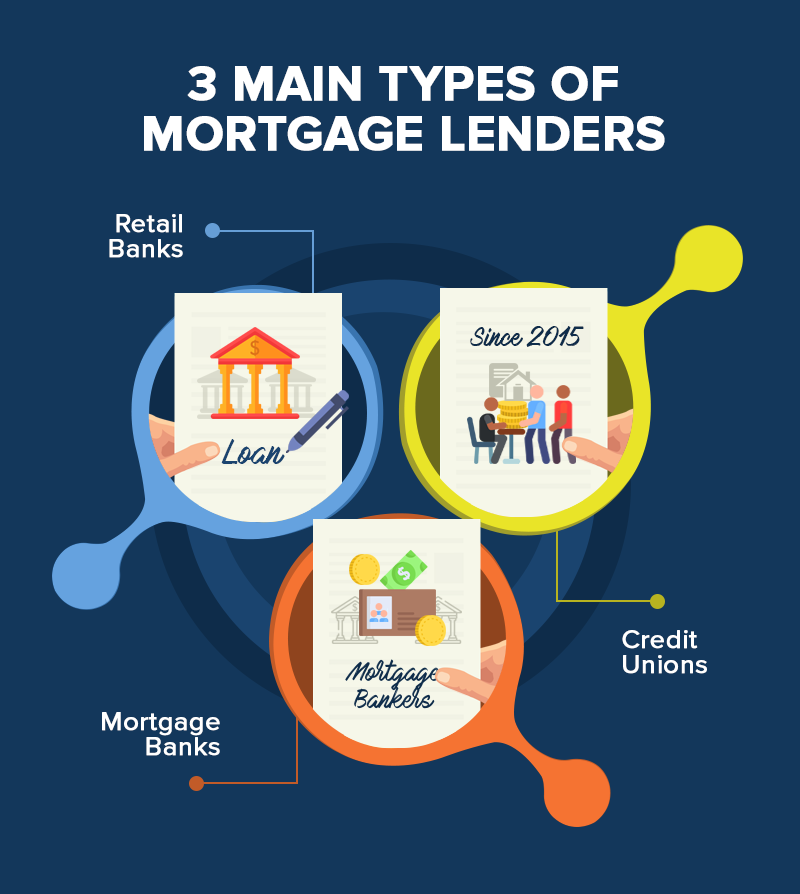
Retail Banks
These companies range from the biggest institutions, such as Bank of America, down to smaller local banks. They do their own underwriting and approve and close loans for consumers. Smaller retail banks can also offer lower fees and less-stringent credit requirements. They are often more flexible on loan approvals because they can choose whether to keep the loans on their books or sell the loans to investment firms like Fannie Mae and Freddie Mac, who then bundle the loans into mortgage bonds. They also usually offer lower mortgage rates if you use them for additional services like a checking account.
If you get your mortgage from one of these organizations, you’ll be assigned a loan officer, who will receive a commission or bonus for writing your loan. He or she will remain your primary point of contact for all future inquiries.
Credit Unions
They are not-for-profit, and customer or member-owned cooperatives that have been boosting their presence in the mortgage lending market since 2015. Because of their not-for-profit tax status, they’re not indebted to shareholders like banks and typically offer more personal service and lower fees because instead of keeping the profit, they pass on the savings to their members.
By getting a loan at a credit union, there’s a greater chance that you’ll stick with the same servicer. That means you can save money from late fees that could arise due to confusion over where you need to send your payments. Credit unions also appeal more to borrowers with less-than-perfect credit or potential borrowers who don’t fit in the traditional profile.
Cons: They can be less convenient because they usually have fewer branches (or a brick and mortar office), as well as ATMs.If you get your mortgage from a credit union, you’ll also be assigned a loan officer who will handle your mortgage transaction.
Mortgage Banks and/or Mortgage Bankers
Many mortgage lenders in the US are mortgage bankers. They can be an individual, a company, or an institution that originates mortgages. They may use their own funds or borrow funds from warehouse lenders at short-term rates to cover the mortgages. Once the mortgage is provided to the home buyer, a mortgage banker may choose to retain the mortgage in their portfolio, or sell it to investors (such as Fannie Mae and Freddie Mac) and repay the short-term note.
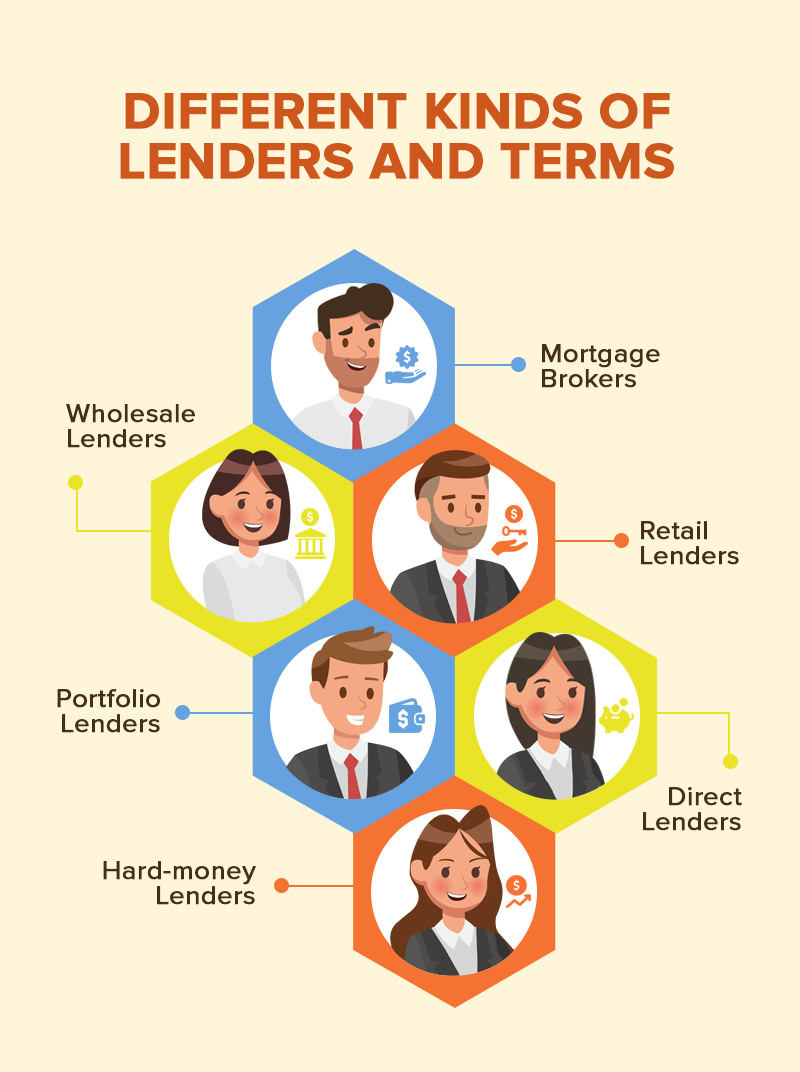
Understanding the different kinds of lenders and terms you may encounter
Aside from getting the best loan product with reasonable terms, you need to know what kind of lender you’ll be dealing with. It can be quite confusing to figure out all the different kinds of lenders that deal in home loans and refinancing, but familiarizing yourself with the terms and their roles can be a big help. Just remember that many lenders are involved in more than one type of lending, and their roles can overlap among various categories. Here we introduce you to their different roles and goals.
Mortgage Brokers
While a mortgage broker does not actually make the loans, he or she works with multiple lenders to find the one that will offer you the best rate and terms. He or she simply acts as a middleman or an agent who may represent the mortgage loan products of many lenders. You can count on a broker to match you with the loan product that best fits your needs at the best price.They usually obtain loans for consumers through retail or mortgage banks and wholesale lenders. The loan is also funded and serviced by the retail or mortgage bank that the broker takes your loan to.
Once you get approved on your loan, you will deal directly with the loan originator or their mortgage service provider. The broker may then add his or her own fee.Here are some of the advantages of using a mortgage broker:
-
They can rate shop for you across many banks, thus saving you time shopping for a loan.
-
You may get a more favorable mortgage rate.
-
A mortgage broker can best lead you to national or regional lenders that are most likely to accept your application based on your financial and personal information.
Wholesale Lenders
Wholesale lenders pertain to those banks and/or institutions that do not deal directly with consumers but offer their loans through third parties such as other banks, mortgage brokers, credit unions, etc. In this kind of lending, the wholesale lender is the one that is actually making the loan and whose name typically appears on mortgage documents. The third party is only acting as an agent in return for a fee. Many large banks have both wholesale and retail operations, such as Bank of America and Wells Fargo.Retail Lenders
They are lenders who issue mortgages directly to homeowners, either by lending their own money or acting as an agent. They provide financing on the retail level with retail rates. Similar to wholesale lending, retail lending may simply be one function offered by a larger financial institution that also provides a range of other financial services.Direct Lenders
If you encounter the term “direct lender,” no need to be confused. Direct lenders are those who originate their own loans through their own funds or borrowed funds. Direct lenders can be banks, mortgage banks, or portfolio lenders (which will be discussed below). Their employees will review your application and make the decision to lend you money. They can be classified as retail lenders as well because they do not involve any third parties or middlemen in making loans to borrowers.Portfolio Lenders
Portfolio lenders are those who use their own money when making home loans, which they maintain on their own books or “portfolio.” Most portfolio lenders tend to be direct lenders as well, so they don’t have to satisfy the demands of outside investors. Because of this, they can set their own terms for the loans they provide.If you’re a “niche” borrower, a portfolio lender can be a good choice for you. These “niche” borrowers who don’t fit the typical lender profile may seek the service of portfolio lenders, especially if they want to get a jumbo loan, if they have a flawed credit, or they are looking at a unique property. Their rates are sometimes quite low so they tend to be very careful about who they lend to.