

-
Dwelling or main property
-
Detached structures like garage and fence
-
Landscaping and other backyard items
-
Personal property
-
Debris removal, and;
-
Living expenses



-
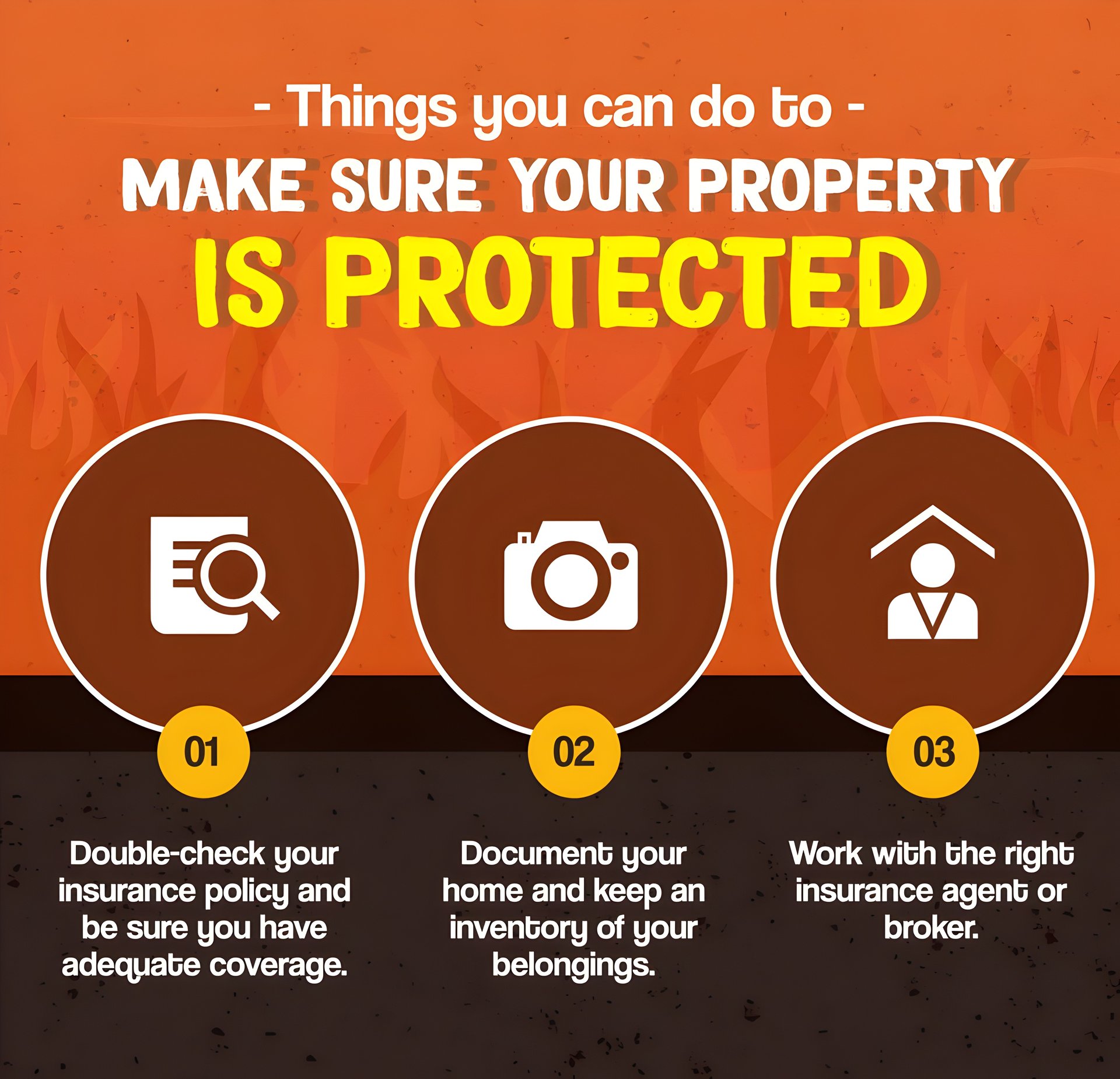
Double-check your insurance policy and be sure you have adequate coverage. Homeowners and renters alike, especially those who live in areas at risk of wildfires, should make sure their coverage is adequate and up to date. Review the fine print of your insurance policy and make sure nothing sneaky has made its way into your policy.
You can also purchase additional coverage for code upgrades, which will help cover the cost of bringing your new home up to the latest building standards. This will protect you in case rules have changed for electrical systems or insulation since the year your house was built.
-
Document your home and keep an inventory of your belongings. Take pictures and videos of your home and your possessions through your smartphone, then keep them on a cloud-based storage platform so you can access them anywhere. In case your possessions were ruined by fire, you can use the images as evidence if your insurer disputes something in your claim.
In case your area has been affected by wildfires and you have to evacuate, save receipts from hotel rooms, food, or rentals. These additional living expenses could be covered by your insurance policy.
- Work with the right insurance agent or broker. Working with the right professionals can make a big difference even before a disaster strikes. They can walk you through the provisions of your insurance policy and explain why you may need to pay additional premiums, especially if you’re living in a high-risk area.